June 12, 1929
Anne’s Birth
[Anne Frank](entity:character-recall-character-anne-frank-6422d3542470) was born in [Frankfurt am Main](entity:location-recall-location-frankfurt-am-main-8034f5a67625), [Germany](entity:location-recall-location-germany-2e3723c2f347), to Edith and [Otto Frank](entity:character-recall-character-otto-frank-1b4f5cc0deb7). Her older sister, [Margot](entity:character-recall-character-margot-50417649938f), had been born three years earlier, and Anne’s childhood unfolded against the growing persecution of Jews under Nazi rule.
The diary later traces how a family’s ordinary life became a life in hiding, giving Anne’s personal recollections the shape of a story repeatedly interrupted by history.
1933–1934
The Family Moves to Holland
Because the family was Jewish and [Germany](entity:location-recall-location-germany-2e3723c2f347) was becoming dangerous, [Otto Frank](entity:character-recall-character-otto-frank-1b4f5cc0deb7) immigrated to Holland in 1933 to manage the [Opekta Company](entity:organization-recall-organization-opekta-company-7b53470bcb3a). Edith joined him in September, while [Anne and Margot](entity:relation-recall-relation-d0bcb9338aa9) first stayed with their maternal grandmother in [Aachen](entity:location-recall-location-aachen-7baacc37d46a).
[Margot](entity:character-recall-character-margot-50417649938f) came to Holland in December, and Anne followed in February 1934. She began at a Montessori nursery school, leaving behind the country of her birth before she was old enough to understand what that departure would mean.
1938
Kristallnacht and Family Flight
After the anti-Jewish pogroms of 1938, [Edith Frank](entity:character-recall-character-edith-frank-9a953841720d)’s two brothers fled [Germany](entity:location-recall-location-germany-2e3723c2f347) for North America. Anne’s elderly grandmother came to live with the Frank family, bringing the danger in Germany closer to their household even as Holland still offered refuge.
Anne remembered the period as part of the growing anxiety surrounding her relatives. The persecution was no longer an abstract political threat; it was already scattering her family across borders.
May 1940 onward
Occupation and Restrictions
[Germany](entity:location-recall-location-germany-2e3723c2f347) occupied the [Netherlands](entity:location-recall-location-netherlands-7cbacd5ddd58) in May 1940, and the Frank family’s freedom narrowed through a succession of anti-Jewish decrees. Jews had to wear the [yellow star](entity:object-recall-object-539ab6744737), surrender bicycles, use restricted shops and services, obey curfews, and attend Jewish schools; public transport and ordinary recreation were forbidden.
Anne recorded these restrictions as an accumulating assault on daily life. School, friendship and movement remained part of her world, but each was increasingly governed by rules that marked Jews as outsiders and exposed them to danger.
June 12, 1942
Anne Turns Thirteen
Anne celebrated her thirteenth birthday with flowers, books, sweets and family gifts. Among them was a diary, which she chose as the place to confide what she could not easily tell anyone else.
The birthday came amid wartime restrictions, but the celebration also belonged to the recognizable world of a schoolgirl: classmates, presents, a favorite cat and plans for the summer. Anne’s diary began at the intersection of that ordinary adolescence and the extraordinary danger surrounding it.
June 14, 1942
The Birthday Party
Anne described her birthday party and the friends who came home with her after school. She wrote about the girls in her class, her social circle, and her wish for a dog like Rin Tin Tin, recording both the small pleasures and the sharp judgments of a thirteen-year-old.
The entry introduces the voice that will carry the book: observant, funny, candid and sometimes unkind. Anne’s diary is not a distant chronicle of events but a young person’s attempt to make sense of people around her.
June 20, 1942
The Search for a True Friend
Anne confided that, despite loving parents, a sister and many acquaintances, she felt she had no true friend with whom she could share her deeper thoughts. She decided to write to the imagined confidante [Kitty](entity:character-recall-character-kitty-d0bbf3d0d3b1), turning the diary into a private conversation.
She sketched her family’s history and described how persecution had steadily restricted Jewish life. The choice to address the diary as a friend gave her a way to examine both the public dangers around her and the inner loneliness she struggled to explain.
June 20, 1942
The Little Dipper Club
Anne described a small circle of school friends who played Ping-Pong and went for ice cream, calling their club “The Little Dipper Minus Two.” She also recounted how boys’ attention often turned into admiration, which she handled with amusement and practiced independence.
These scenes preserve the social ease of her life before hiding. Their lightness makes the coming loss of school, friends and freedom more tangible, while establishing Anne’s lively confidence in the world she is about to leave.
June 21, 1942
The Chatterbox Essays
After repeatedly talking in math class, Anne’s teacher, Mr. Keesing, assigned her essays on being a chatterbox. She argued that talking was an inherited family trait, then answered a later punishment with a comic poem about a duck family whose father silenced noisy ducklings.
Mr. Keesing laughed and read the poem to other classes. The episode turned a disciplinary clash into a shared joke, showing Anne’s quickness with language and the humor she could use to meet authority on her own terms.
Late June–early July 1942
Hello Becomes a Suitor
Anne met [Helmuth Silberberg](entity:character-recall-character-helmuth-silberberg-bdd9bcc503c8), whom she called Hello, through a friend. He began accompanying her to school and told her about his parents, who were in Belgium, and his life with his grandparents. Though she enjoyed his attention, Anne insisted that she was not in love with him.
Their closeness brought a new strand of adolescent romance into her diary, but Anne’s thoughts remained tangled with memories of [Peter Schiff](entity:character-recall-character-peter-schiff-bb706b197b8c). The episode shows how, even before the family went into hiding, she was trying to distinguish affection, admiration and love.
July 5–6, 1942
The Call-Up Notice
After Anne received her report card, [Otto Frank](entity:character-recall-character-otto-frank-1b4f5cc0deb7) spoke seriously about the possibility of the family going into hiding. He explained that they had already been moving belongings elsewhere because they feared confiscation and capture, but told Anne not to worry yet.
The warning became immediate when [Margot](entity:character-recall-character-margot-50417649938f) received a call-up notice from the [SS](entity:organization-recall-organization-ss-4977af73ebea). Anne first feared that her father was being summoned, then learned that Margot was the target. The family’s carefully prepared plan had to begin at once.
July 6–9, 1942
The Frank Family Goes into Hiding
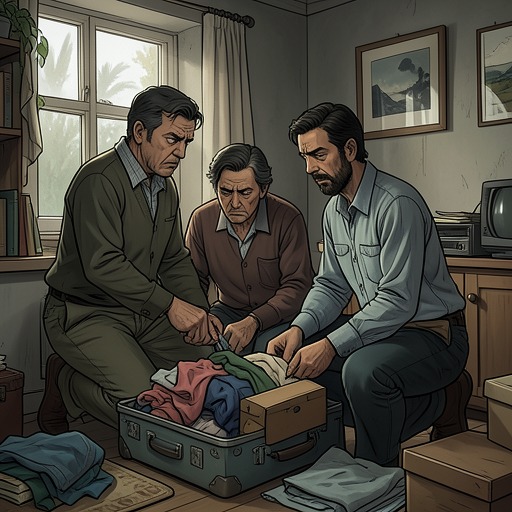
The Franks packed what they could carry, dressing in multiple layers because a Jewish family could not safely leave with suitcases. Anne’s diary was among the first things she put in her schoolbag; memories mattered more to her than clothes. Her cat, [Moortje](entity:character-recall-character-moortje-433098f03dae), was left behind with instructions for neighbors to take it in.
On July 9, Anne, Edith and Otto walked through the rain to the office building at 263 Prinsengracht. [Margot](entity:character-recall-character-margot-50417649938f) had already ridden there by bicycle with [Miep](entity:character-recall-character-miep-58d77f985e79). Their destination was the concealed rooms at the rear of Otto’s workplace, where the family hoped to remain undiscovered.
July 9–11, 1942
The Secret Annex Revealed
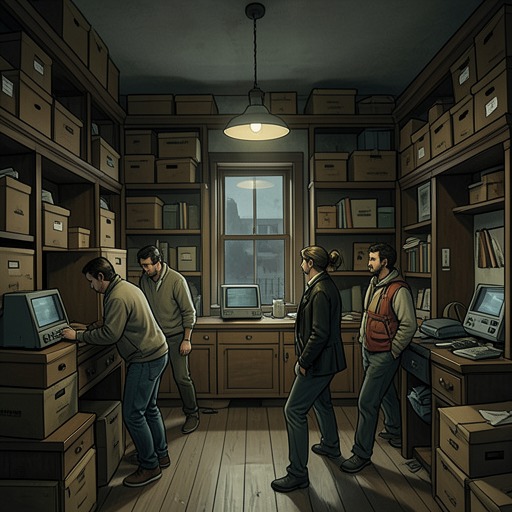
Anne described the rooms behind the office building and the work of turning them into a home. Boxes and furniture filled the rooms, so she and Otto unpacked and organized while Edith and [Margot](entity:character-recall-character-margot-50417649938f) recovered from exhaustion. The helpers supplied food and practical support as the family settled in.
Anne called the Annex a strange pension and an unexpectedly comfortable place to hide. Yet the household had to remain silent, cover its windows with makeshift curtains and avoid being seen or heard by people working nearby. The contrast between a domestic interior and constant danger became the defining condition of her life there.
July 13, 1942
The Van Pels Family Arrives
The van Pels family arrived earlier than expected: Hermann and Auguste came after their son Peter, bringing a chamber pot and a collapsible tea table among their belongings. The seven residents began sharing meals and quickly formed a single household.
Anne initially found Peter shy and awkward and expected little from his company. The arrival enlarged the group’s chances of survival but also created a crowded, complicated community in which habits, temperaments and limited supplies would repeatedly collide.
August 1942
A Bookcase Hides the Entrance
As searches for hidden bicycles made the building more dangerous, [Victor Kugler](entity:character-recall-character-victor-kugler-768297e80cb1) arranged for a bookcase to be built across the entrance to the Annex. [Mr. Voskuijl](entity:character-recall-character-mr-voskuijl-e86b61754224) carried out the carpentry, creating a hinged barrier that disguised the passageway.
The bookcase made the hiding place more difficult to detect, but it also made every movement through the entrance a reminder of the risk. The residents had to duck through the low opening and adapt their daily routines around a concealment that could never guarantee safety.
Summer 1942
Life Behind the Bookcase
The residents established strict routines: they whispered, avoided water during working hours and tried not to let sounds carry into the warehouse or neighboring businesses. They listened to the radio, studied, read and cooked, while the office helpers brought supplies and canned fruit.
The rules could not erase the strain of confinement. Anne feared discovery, missed the outdoors and mourned [Moortje](entity:character-recall-character-moortje-433098f03dae), while friction between her and Edith intensified. The Annex offered temporary shelter, but its close quarters turned ordinary disagreements into recurring tests of patience.
September 2, 1942
The Van Pels Quarrel
Anne witnessed a fierce argument between Hermann and [Auguste van Pels](entity:character-recall-character-auguste-van-pels-b6dd4289a308), an intensity she had not seen in her own parents’ disagreements. Their son Peter was caught between them, and Anne described him as sensitive, idle and prone to complaints about minor ailments.
The clash exposed how confinement magnified tensions between adults as well as between children and parents. Anne’s sharp observations often made the household’s irritation comic, but they also recorded the cost of living without privacy or escape.
Early September 1942
Peter’s Forbidden Book
Peter secretly read a book about women that his parents had kept from him. When Hermann took it away, Peter retreated to the attic and refused to come down for dinner. The adults tried to force the issue, but Otto eventually coaxed him back toward the family.
The episode showed Peter’s guarded defiance and the way a teenager’s curiosity could become a household confrontation. Anne, who was herself eager to understand the adult world, watched the clash with both amusement and sympathy.
September 1942
Anne’s Roommate Changes
Anne wrote of her continuing conflicts with [Auguste van Pels](entity:character-recall-character-auguste-van-pels-b6dd4289a308) and her sense that Edith and [Margot](entity:character-recall-character-margot-50417649938f) often sided with each other. She felt closest to Otto, whose patience and understanding gave her a refuge from the family’s criticism.
Her diary became the place where she could preserve a version of herself that the household’s judgments seemed to deny. The entries are important not because Anne’s view is impartial, but because they reveal a teenager struggling to claim an inner life in a setting where everyone was continually exposed to everyone else.
Late September 1942
Bathing in the Office
With no bathtub and hot water available only downstairs, the residents improvised separate places to wash. Anne eventually chose the office bathroom, where she could close the door and bathe without being seen. When a plumber worked on the building’s pipes, the household had to remain still and use jars during the day.
The routine made the ordinary intimate and logistical at once. Anne’s matter-of-fact account of bodily needs underscores how even privacy and basic comfort had to be negotiated under the restrictions of hiding.
October 20, 1942
The Carpenter’s Frightening Visit
A carpenter came to fill the building’s fire extinguishers without the office staff warning the Annex residents. Anne and Otto heard him working near the concealed entrance and feared he was testing the bookcase or had discovered the hiding place.
The apparent intruder turned out to be a misunderstanding: the bookcase hook had stuck, preventing the helpers from alerting the residents. Once [Victor Kugler](entity:character-recall-character-victor-kugler-768297e80cb1) called out, the family opened the hidden door. The scare showed how a small mechanical failure could make the threat of discovery feel immediate and overwhelming.
October 9, 1942
Jewish Friends Taken Away
[Miep](entity:character-recall-character-miep-58d77f985e79) told the residents that Jewish friends and acquaintances were being seized and sent to [Westerbork](entity:location-recall-location-westerbork-8b43af7cb5b3) in cattle cars. Anne relayed reports of overcrowding, hunger, poor sanitation and the shaving of women and children, and understood that deportation could lead to death.
The news changed the emotional scale of life in hiding. The residents were safer than those being hunted, but Anne could not take comfort in that safety without feeling guilt for the people they could no longer help.
October 1942
Bombs and Hostages
Anne recorded the deportation of Jews and the forced departure of young Dutch men for labor in [Germany](entity:location-recall-location-germany-2e3723c2f347), alongside the German practice of taking hostages and executing innocent people in retaliation for sabotage. Reports from the outside world made the household’s isolation feel both protective and morally painful.
She rejected the idea that German identity could define her, writing that Hitler had taken away the family’s nationality. Her reflections show how persecution forced the question of belonging into the intimate space of a teenager’s diary.
November 17, 1942
Fritz Pfeffer Joins the Annex
After reports of worsening persecution, Otto decided that the group should shelter one more person. They chose the dentist [Fritz Pfeffer](entity:character-recall-character-fritz-pfeffer-b7b8c49bb723), who arrived through a carefully arranged meeting and was astonished to discover that the Franks had not escaped to Belgium as rumors suggested.
Pfeffer shared Anne’s small room, while [Margot](entity:character-recall-character-margot-50417649938f) moved to a folding bed in her parents’ room. The extra resident brought another life to save, but also reduced the little privacy Anne had managed to preserve.
November 17, 1942
The Annex Prospectus
To welcome [Fritz Pfeffer](entity:character-recall-character-fritz-pfeffer-b7b8c49bb723), the residents presented him with a mock prospectus for the Annex. It advertised free accommodation, a low-fat diet, limited radio access, compulsory quiet hours, study courses and no permitted outdoor recreation.
The joke made the household laugh, but its clauses described the truth of their confinement. Humor offered a temporary way to turn deprivation into shared language without making the dangers disappear.
November 1942
Reports from the Outside
[Fritz Pfeffer](entity:character-recall-character-fritz-pfeffer-b7b8c49bb723) described the nightly roundups he had witnessed: armed men searched homes, separated families and marched away the sick, the elderly, children and pregnant women. Anne pictured the people being beaten and driven toward an unknown fate, and felt ashamed to sleep safely while friends suffered.
The accounts made the Annex’s protection feel inseparable from helplessness. Anne could not reach those outside, and her writing became a record of both their suffering and her inability to intervene.
Late November 1942
The Power Goes Out
After the residents exceeded their electricity ration, they faced the prospect of spending long periods without light. They invented ways to pass the dark hours, including riddles, exercise, language practice and peering through binoculars at the neighbors’ illuminated rooms.
The improvised entertainment shows how the residents tried to make a life from what confinement allowed. Their curiosity about the outside world could not replace it, but it gave the days a small opening beyond the Annex’s walls.
December 1942
Hanukkah and St. Nicholas Day
The residents marked Hanukkah with a brief candle lighting and a wooden menorah Hermann had made. For St. Nicholas Day, [Miep](entity:character-recall-character-miep-58d77f985e79) and [Bep](entity:character-recall-character-bep-cd728f537b1d) arranged a decorated basket of small gifts and verses, bringing a surprise into the hidden household.
The celebrations gave the residents a moment of shared warmth amid scarcity and fear. Anne’s account preserves the simple pleasure of being remembered and the effort of the helpers to make their confinement feel, briefly, like a home.
December 10, 1942
Sausage Making
[Hermann van Pels](entity:character-recall-character-hermann-van-pels-ffaf1cfb1d7a) used his experience in the meat trade to prepare sausages from meat the group had acquired. Anne described the crowded kitchen, where each resident watched him work while trying to perform their own tasks, and recounted [Fritz Pfeffer](entity:character-recall-character-fritz-pfeffer-b7b8c49bb723)’s makeshift dental treatment of [Auguste van Pels](entity:character-recall-character-auguste-van-pels-b6dd4289a308).
The episode combines the resourcefulness required to preserve food with the comic disorder of communal life. In the Annex, cooking, illness and entertainment unfolded in the same rooms, with no distance between private discomfort and public spectacle.
December 13, 1942
The Outside World Through a Crack
Anne watched passersby from behind a gap in the curtains, studying bicycles, boats, children and the rain. Seeing two Jewish people in the street gave her an uncanny feeling, as if she were spying on others who shared her fate.
The small view mattered because the residents were forbidden to look openly outside. Anne’s careful observations made the street seem both close and unreachable, sharpening the contrast between the life continuing beyond the windows and the lives suspended behind them.
January 13, 1943
The War Enters the Daily Routine
Anne described raids on homes, families torn apart and children returning from school to find their parents gone. Dutch Christians also feared forced labor, while aircraft crossed the country toward German cities and the war’s casualties mounted elsewhere.
She recognized how fortunate the residents were, yet she also saw the poverty and hunger of children outside their hiding place. Their safety did not make the wider catastrophe feel distant; it made their inability to help more painful.
January–February 1943
Anne’s Anger at Home
Anne described feeling blamed and mocked by the people around her, especially by Edith and the van Pels family. She longed to be taken seriously rather than dismissed as noisy, lazy or childish, and wrote that she often had to hide her distress behind jokes.
Her anger was part of a longer struggle to separate her sense of self from the roles her family assigned her. The diary let her argue back privately even when the crowded household offered no room to be alone.
November 1942
Beans Spill Through the Annex
When the group tried to move a heavy sack of beans into the attic, it split and sent beans clattering down the stairs. Peter and Anne joined in gathering them from the corners, while the noise briefly made the building seem to be collapsing.
The accident turned a fragile food supply into a comic cleanup and gave the residents a shared task. Such moments of levity were especially valuable in a life shaped by shortages and the possibility that any loud sound could expose them.
November 1942
The Eighth Resident’s Rules
After [Fritz Pfeffer](entity:character-recall-character-fritz-pfeffer-b7b8c49bb723) arrived, Anne wrote down the household’s mock rules: quiet speech, restricted radio listening, daytime rest when required, study and exercise, and no going outside. The list even set meal and bathing times, turning a makeshift refuge into an apparent institution.
The rules captured the discipline needed to keep eight people hidden in one building. They also reveal Anne’s ability to observe confinement with a comedian’s eye, even as every rule served the serious purpose of survival.
July 1943
The First Warehouse Break-In
Peter discovered that the warehouse and street doors had been left open. The intruders had forced their way in and stolen cashboxes, blank checkbooks and coupons for the group’s sugar supply. The residents spent the morning silent and dressed, following their emergency rules while they waited for news.
The loss threatened the household’s already precarious provisions, and the burglary revived fear that strangers might reach the hidden entrance. It was one of several reminders that the danger came not only from official searches but from ordinary criminal intrusion.
July 1943
The North Amsterdam Bombing
Anne heard that a heavy raid on North [Amsterdam](entity:location-recall-location-amsterdam-68440c77c10d) had destroyed streets and killed or wounded many people. Reports of children searching the ruins for their parents stayed with her, while the distant drone of aircraft continued to make the danger feel near.
The bombing brought the war’s destruction into the residents’ immediate city. Though they remained hidden from the streets, they could not separate their daily fear from the deaths and devastation around them.
August 1943
The Annex’s Daily Clock
Anne set out the routine of an ordinary day: beds were rearranged at night, the residents took turns in the bathroom, and quiet hours began before office workers arrived. At lunch the helpers gathered around the radio, then the residents returned to study, chores and naps.
By describing schedules and repeated domestic gestures, Anne showed how survival depended on organizing every hour. The routine lent structure to life in hiding, but its repetition also made the days feel narrow and difficult to escape.
Summer 1943
The Radio Is Surrendered
When the authorities ordered radios surrendered, the residents gave up their large Philips set and relied on a smaller concealed receiver. Anne understood the danger of disobedience, but she also described the radio as a morale-giving voice that helped them resist despair.
The change made news more precarious to obtain without ending the household’s connection to the world. For the residents, listening was not merely a pastime: it offered information, hope and a sense that events beyond their walls were still moving.
July 13, 1943
The Table Dispute
Anne asked [Fritz Pfeffer](entity:character-recall-character-fritz-pfeffer-b7b8c49bb723) for permission to use their shared room’s table for two afternoons each week. He refused, belittled her studies and argued that he needed the space. Anne confronted him again, and the dispute escalated until Otto intervened on her behalf.
Pfeffer ultimately agreed to the arrangement, though he remained resentful. The conflict was about more than a desk: it exposed the unequal distribution of privacy and the daily negotiation required when two people shared a room in close confinement.
July 25–26, 1943
Mussolini Resigns
After a day of air raids and alarms, Anne woke to the news that Mussolini had resigned and the King of [Italy](entity:location-recall-location-italy-85c2492cd54b) had taken over the government. The residents were jubilant, interpreting the political change as a possible turning point in the war.
Their excitement came after a night in which Anne had repeatedly sought refuge in Otto’s bed during the bombing. The sudden arrival of hopeful news showed how closely the residents’ moods depended on the radio and on events they could neither influence nor see.
August 1943
An Ordinary Night in Hiding
Anne described the Annex’s evening and night in detail: beds and chairs shifted, residents took turns washing, the blackout screen went up, and [Fritz Pfeffer](entity:character-recall-character-fritz-pfeffer-b7b8c49bb723) returned late from working downstairs. At night, the sounds of breathing, beds and distant gunfire shaped the residents’ uneasy sleep.
The account turns a familiar routine into a portrait of life stripped of ordinary privacy. Anne’s attentive humor makes the discomfort vivid, while the repeated listening for danger shows that even sleep could not provide a complete escape from fear.
September 8, 1943
Italy Capitulates
The residents heard an announcement that [Italy](entity:location-recall-location-italy-85c2492cd54b) had capitulated, followed by a jubilant Dutch broadcast from [London](entity:location-recall-location-london-420923d4a60a). Anne recorded the music and speeches that accompanied the news, as well as the Allied landing at Naples and German occupation of northern Italy.
The capitulation gave the household a fresh reason to hope, though the news was tempered by concern for [Victor Kugler](entity:character-recall-character-victor-kugler-768297e80cb1), who needed a serious stomach operation. Anne’s entry holds political change and personal anxiety side by side, as life in the Annex demanded attention to both.
September 1943
Suspicion in the Warehouse
Anne worried that [Mr. van Maaren](entity:character-recall-character-mr-van-maaren-95db9b37ec41), a warehouse worker known for curiosity and unreliability, might suspect the hidden residents. One day [Victor Kugler](entity:character-recall-character-victor-kugler-768297e80cb1) avoided being seen by him, removing his shoes and carefully finding another route through the building.
The near encounter showed how the Annex’s safety depended on the helpers’ ability to manage every ordinary movement. A suspicious employee could be as dangerous as an official search, and the residents had little control over the people whose work brought them close to the concealed rooms.
Autumn 1943
A House Divided by Food
Relations between the residents worsened as disputes over food, money and household supplies multiplied. Anne reported that the van Pels family had withheld meat and other provisions, while [Hermann van Pels](entity:character-recall-character-hermann-van-pels-ffaf1cfb1d7a)’s financial troubles brought new arguments over selling possessions, including Auguste’s fur coat.
Scarcity made each division feel like a judgment about fairness and loyalty. Anne watched the adults’ conflicts exhaust the household, and increasingly turned to study and writing as a way to keep her mind from being consumed by the arguments.
November 8, 1943
The Secret Annex’s Dark Clouds
In a moment of depression, Anne pictured the eight residents as a small patch of blue sky surrounded by black clouds that were closing in. She felt that the circle of safety around them was tightening, while the people within it kept colliding with one another.
The image gathered the diary’s recurring anxieties into a single vision: the residents were protected for the moment but surrounded by danger, and hope could not remove their uncertainty. Anne’s metaphor gave emotional form to the pressure of waiting for an end she could not predict.
November 11, 1943
The Fountain Pen Burns
Anne’s treasured fountain pen disappeared after she was forced to move aside while Otto and [Margot](entity:character-recall-character-margot-50417649938f) practiced Latin. The family feared it had fallen into the stove with the rubbish, and the next morning they found its clip among the ashes; the celluloid pen had burned.
Anne mourned the object as a companion that had travelled with her through school and into hiding. Its loss became a small but meaningful image of how the war had consumed pieces of her former life, while writing remained one of the few things she could still claim as her own.
November 27, 1943
Hanneli in the Dream
Anne dreamed that [Hanneli](entity:character-recall-character-hanneli-84a6c6667155) appeared in rags, thin and frightened, looking at her as if asking why Anne had abandoned her. The image stirred memories of their friendship and Anne’s guilt that she had misunderstood Hanneli’s feelings before the family went into hiding.
Unable to learn what had become of her friend, Anne could only pray that she was still alive and comforted. Hanneli became, in Anne’s mind, a figure for the suffering of friends and Jews whom the residents could not reach.
December 6, 1943
St. Nicholas Day in a Shoe
Anne and Otto prepared a playful St. Nicholas celebration using a decorated laundry basket and verses. The residents found small packages hidden inside their shoes, a modest surprise that recalled the previous year’s celebration.
The event gave the Annex a moment of shared laughter after months of strain. Anne’s poem acknowledged that the day could not be as carefree as before, but the household still found a way to mark it together.
December 1943
Christmas Behind Closed Doors
Anne described the emotional swings of life in hiding during the winter holidays. She felt grateful for the residents’ relative safety when thinking of persecuted Jewish children, yet envied the ordinary outings and friendships described by visitors from outside.
She longed to ride a bicycle, dance, see the world and be treated simply as a teenager. The entry makes clear that gratitude did not cancel deprivation: Anne could recognize the danger others faced while still grieving the youth and freedom she had lost.
January 2, 1944
Anne Reconsiders Her Mother
Rereading her earlier diary entries, Anne was shocked by the harshness with which she had written about Edith. She began to see how her mother’s strain and Anne’s own sensitivity had trapped them in a cycle of hurt and anger, even though Anne still felt unable to love her as a child might.
The reflection marked a change in Anne’s self-understanding. Rather than erasing her earlier anger, she tried to recognize her own part in the conflict and to distinguish what she felt from what she could fairly judge about her mother.
January 6, 1944
Anne Writes About Puberty
Anne wrote openly about the changes of puberty, her menstrual cycle, her growing curiosity about her body and her desire for closeness with another girl. She recalled asking Jacqueline about physical intimacy and described the mix of curiosity and emotion that had accompanied adolescence.
Writing about these subjects helped Anne claim an inner life that adults had often treated as improper or immature. The diary became a space where she could ask questions and record feelings without having to disguise them as jokes.
January 6–7, 1944
Peter Becomes a Confidant
Anne began seeking out Peter in his room, using his interest in crossword puzzles as an opening for conversation. She found him shy and uncertain, and the encounter awakened her memory of [Peter Schiff](entity:character-recall-character-peter-schiff-bb706b197b8c), the boy she had loved as a child.
Anne insisted that her interest in [Peter van Pels](entity:character-recall-character-peter-van-pels-d23c45748a30) was not yet love, but her diary quickly filled with dreams and recollections. The shift mattered because it offered her a new possibility of intimacy in a household where she had long felt emotionally isolated.
Early January 1944
A Dream of Peter
Anne dreamed of [Peter Schiff](entity:character-recall-character-peter-schiff-bb706b197b8c), remembering his cheek against hers and the affection she had felt before he stopped seeing her. When she woke, she recognized that her old attachment had not vanished, even though the Peter now near her was a different person.
The dream intensified Anne’s longing for a boy who could understand her. It also blurred memory and present desire, helping her imagine emotional closeness at a time when the outside world remained inaccessible.
January 12, 1944
The Sisters Grow Closer
Anne noticed that [Margot](entity:character-recall-character-margot-50417649938f) had become kinder and more like a friend than the distant, perfect sister Anne had once resented. She continued to struggle with Edith, but could now see more clearly how her own outward cheerfulness concealed loneliness and hurt.
Her changing relationship with Margot formed part of a wider process of reassessing the people around her. Even in the narrow world of the Annex, Anne’s view of her family was not fixed; it shifted as she grew more reflective and more able to see beyond her first judgments.
January 22, 1944
Anne Rethinks the Van Pels
Anne resolved to reassess the van Pels family independently rather than simply adopting her parents’ judgments. She recognized that the Franks might also have contributed to the arguments and considered speaking openly with [Auguste van Pels](entity:character-recall-character-auguste-van-pels-b6dd4289a308) instead of treating every dispute as proof of the other family’s fault.
The decision did not erase the household’s conflicts, but it showed Anne trying to replace inherited loyalties with her own judgment. Her diary increasingly became a record not only of anger but of deliberate efforts to change how she treated others.
January 24, 1944
Anne and Peter Discuss Sex
A conversation about the warehouse cat led Anne to ask Peter about sexual anatomy and how a person could know it was male or female. He showed her the cat and answered her questions matter-of-factly, without turning the subject into a joke.
Anne was surprised by the naturalness of their exchange. It gave her a new sense of trust with Peter and reinforced her belief that young people could discuss intimate matters openly, even when adults had left them to learn piecemeal from books and whispers.
January 28, 1944
Anne Lists Her Interests
Anne described her enthusiasm for family trees, history, mythology and movie stars, along with the studies she pursued inside the Annex. She took pride in the knowledge she had gathered and in her ability to remember actors, books and historical detail.
The catalogue reveals how Anne continued to build an intellectual life despite the loss of school and public freedom. Her interests were not only ways to pass time; they were part of the future self she hoped to develop beyond hiding.
January 1944
The Helpers’ Resistance
Anne described resistance groups that forged identity papers, supported people in hiding and found places for those forced underground. She praised [Miep](entity:character-recall-character-miep-58d77f985e79), [Bep](entity:character-recall-character-bep-cd728f537b1d), [Jan](entity:character-recall-character-jan-7e299a0a9728), [Victor Kugler](entity:character-recall-character-victor-kugler-768297e80cb1) and [Johannes Kleiman](entity:character-recall-character-johannes-kleiman-f043fa5d910e) for carrying out dangerous daily work without complaining about the burden of protecting the residents.
Her account broadened the meaning of courage beyond the battlefield. The helpers’ ordinary errands, gifts and steady cheerfulness made the Annex’s survival possible and gave Anne evidence of human kindness amid persecution.
January 30, 1944
Anne Faces Her Loneliness
Anne admitted that she urgently wanted time alone and felt unable to tell Otto what was troubling her. One night she went downstairs by herself while German aircraft passed overhead, looked up at the sky and tried to trust in God rather than in other people’s presence.
The moment captures her growing independence and the cost of keeping her feelings private. She feared that she might someday be left alone more completely than she wanted, even as she insisted that she needed solitude in the present.
February 3, 1944
Plans for an Invasion
As reports of a possible Allied landing intensified, the Annex residents argued over what they would do if [Amsterdam](entity:location-recall-location-amsterdam-68440c77c10d) flooded or the Germans evacuated the city. They inventoried food, water, fuel and supplies, and debated whether to stay put or try to escape.
The practical planning exposed the uncertainty beneath their jokes. Anne said she had grown so accustomed to danger that she could scarcely care whether she lived or died, while still hoping that events would somehow end well.
February 12, 1944
Spring Awakens in Anne
On a bright, windy day, Anne felt a powerful longing for conversation, freedom, friends and privacy. She described spring as awakening within her, bringing energy and restlessness that she could neither explain nor easily conceal.
The entry turns the season into an emotional threshold. The outdoor world she could not enter seemed to intensify rather than quiet her desires, and her growing attachment to Peter soon gave those feelings a focus.
February 14–16, 1944
Peter Begins to Confide
Peter told Anne that he often became tongue-tied, blushed and could not express what he meant. Anne listened closely and found in his uncertainty a sense of fellowship she had previously shared only with her girlfriends.
Their conversations continued as Anne helped him with French and learned about his plans to live on a rubber plantation after the war. She felt his warmth and recognized his need for affection, while beginning to see their relationship as a genuine friendship rather than an imagined romance.
February 23, 1944
A Quiet Moment in the Attic
Anne and Peter sat together in the attic, looking at the blue sky, birds and the chestnut tree outside. They were moved enough to remain silent, sharing the view and the air without needing to fill the moment with conversation.
The experience helped Anne find relief in nature and in the possibility that Peter might understand her. She wrote that the sky and the living world could restore happiness even to people trapped by fear and confinement.
Late February 1944
Anne’s Love for Peter Deepens
Anne began thinking about Peter throughout the day and interpreting their similarities as signs of a deeper connection. She imagined that they were both lonely, wounded by their mothers’ lack of understanding and uncertain how to reveal their inner selves.
Her feelings grew intense, but she remained unsure whether Peter could meet her need for emotional closeness. The diary records both the hope of being understood and the danger of building an ideal image of someone she still barely knew.
March 1, 1944
A New Break-In
[Hermann van Pels](entity:character-recall-character-hermann-van-pels-ffaf1cfb1d7a) found the office doors open and the front office in disorder. The following morning, Peter reported that a projector and a briefcase had been stolen. Because there were no signs of forced entry, the residents feared that someone might have a duplicate key and could return.
The burglary renewed the possibility that an intruder had seen or heard something that could expose the Annex. Anne’s joking request for a trustworthy detective could not disguise how little the residents knew about their danger.
March 2–3, 1944
Anne and Peter Share Their Fears
Anne spoke with Peter about the arguments in his family and her own troubled relationship with Edith. Peter described feeling caught between his parents, and Anne urged him to speak with Otto, whom Peter trusted and admired.
When Peter said that Anne helped him by being cheerful, she felt that their bond was becoming real. She was no longer simply projecting a dream onto him; he had begun to tell her about himself, and she hoped their friendship could give each of them support.
March 19, 1944
Anne and Peter’s First Long Talk
Anne went to Peter’s room to ask why he had refused a piece of sausage she had brought him. After he explained that he had feared seeming greedy, they moved to the dimness by an open window and spoke about their parents, loneliness, trust and the different selves they showed to others.
Peter told Anne that her cheerfulness helped him, and she felt grateful that he accepted her visits. The conversation gave their relationship a foundation of mutual confidence, though Anne still wondered whether Peter could become the kind of intimate companion she wanted.
March 20–22, 1944
Margot Gives Her Blessing
Anne worried that her growing closeness with Peter might hurt [Margot](entity:character-recall-character-margot-50417649938f), who admitted that she was not entirely without jealousy but wished the two of them well. Margot explained that she wanted someone with whom she could share her own thoughts, though she did not see Peter as the person for her.
Anne answered that the situation still troubled her and that trust had to come from both sides. Their exchange brought the sisters closer and showed that Anne’s new attachment to Peter existed within a family of competing needs, not outside it.
March 10, 1944
The Potato Supplier Is Arrested
The police arrested a man who had supplied the Annex with potatoes, butter and jam. His wife was expecting another child, and the loss brought danger and hardship to the family as well as to the residents who depended on him.
The news made the outside world’s peril immediate again, even as Anne found herself preoccupied with her growing relationship with Peter. The diary holds both realities at once: sorrow for the man and his family, and the private longings that continued despite the crisis.
March 1944
Fear Returns During a Break-In
A noise in the building made the residents suspect that burglars were present. Peter and Otto went downstairs to investigate while the others waited in fear, trying to distinguish ordinary sounds from the approach of danger.
The incident reinforced the household’s awareness that any intruder might discover the concealed rooms. Even after a scare passed, the residents could not simply return to normal; fear lingered in the silences and in their careful movement through the building.
April 15, 1944
Anne and Peter’s First Kiss
Anne and Peter sat close together on his divan, with his arm around her shoulders and her head resting against him. Before they went downstairs, he kissed her through her hair, partly on her cheek and partly on her ear. Anne felt overwhelmed by happiness and looked forward to seeing him again.
The kiss was a turning point in a relationship that had grown through shared conversations and loneliness. Anne soon questioned whether the intimacy was right for their age and circumstances, but she also defended their need for affection in a life cut off from ordinary freedom.
April 18–19, 1944
A Deeper Confession
Anne and Peter spoke more openly about sex, trust and their feelings for one another. Their conversation ended in a mutual kiss near the mouth, and Anne later described the peace she felt sitting with Peter by an open window, his arm around her.
The intimacy gave Anne comfort, but it also raised questions about how far she wanted to go and whether Peter’s feelings matched her own. Her diary preserves the coexistence of desire, uncertainty and a strong wish to understand each other rather than simply remain physically close.
Easter Sunday 1944
The Easter Burglary
During the evening, Peter heard burglars breaking into the warehouse. Otto, Hermann and Peter went downstairs, but the intruders fled when Hermann shouted. A man and woman with a flashlight then appeared at the opening, forcing the residents to retreat behind the bookcase and fear that the police would return.
The group spent the night in darkness, listening to footsteps and the rattle of the concealed entrance as someone reached the bookcase. They could not use the ordinary bathroom or move freely, and Anne feared that the police would discover them and take them away.
Easter Monday 1944
The Police Reach the Bookcase
After a night of waiting, the residents heard the police search the building and climb the stairs. Someone rattled the bookcase and a can fell, but the intruders eventually withdrew without discovering the hidden rooms. The residents remained in terror until [Jan](entity:character-recall-character-jan-7e299a0a9728) and [Miep](entity:character-recall-character-miep-58d77f985e79) arrived and helped restore the building to order.
A potato supplier who had seen the opening chose not to alert the police, and the helpers took steps to repair the damage and report the burglary safely. The ordeal brought the residents close to capture and led to tighter security rules, including restrictions on movement, water use and the opening of windows.
April 1944
Anne’s Resolve After the Ordeal
After the Easter burglary, Anne reflected on the family’s helplessness and the danger faced by the people protecting them. She wrote that Jews were constrained by obligations without rights, yet she believed they had to remain brave and endure until the war ended.
The ordeal strengthened her determination to make a life beyond hiding. Anne imagined becoming a writer and working for humanity, and expressed a desire to be accepted as Dutch while also affirming that she and the other residents would remain Jews.
April 1944
Peter and Anne Grow Closer
After the burglary, Anne and Peter sat together in the attic, holding one another while birds sang outside. Anne found the closeness tender and peaceful, but she also questioned whether she was becoming too dependent on Peter and whether their relationship had moved too quickly.
The growing intimacy offered comfort in a life of fear and restriction, yet Anne remained alert to the difference between temporary solace and a lasting bond. Her reflections reveal a young person trying to make emotional choices without the freedom or privacy usually available to teenagers.
Late April–early May 1944
A Talk With Otto
Otto asked Anne to show restraint in her relationship with Peter, concerned that living so close together could create conflict. Anne rejected the idea that she should simply stop visiting him, explaining that she trusted him and did not want to prove otherwise by withdrawing.
She then wrote Otto a forceful letter accusing him of having failed to support her when she was lonely and distressed. When they spoke, however, she saw how deeply the letter had hurt him and recognized that she had been unjust to the father who had tried to help her.
May 7, 1944
Anne Apologizes to Otto
Anne admitted that her letter to Otto had been cruel and unfair. She had wanted him to respect her independence, but she recognized that she had used her pain to wound someone who had consistently defended and cared for her.
Otto forgave her and offered to destroy the letter. Anne was ashamed that he treated her gently after she had hurt him, and resolved to take his patience as an example. The episode became a decisive lesson in humility and responsibility for her own words.
May 8–11, 1944
Anne Imagines Her Future
Anne wrote about her family’s former prosperity and her own ambitions after the war. She imagined studying art history and languages in Paris and [London](entity:location-recall-location-london-420923d4a60a), while increasingly seeing writing as a way to live meaningfully beyond the domestic life she expected adults to prescribe.
She worked on stories and planned a book called The [Secret Annex](entity:object-recall-object-042a569e8cdc), hoping to publish it after the war. Her literary ambition gave her a future to imagine even as the household remained confined and uncertain.
May 13, 1944
The Chestnut Tree Blooms
On Otto’s birthday and his wedding anniversary with Edith, the residents celebrated with gifts, food and flowers. Anne noted that the chestnut tree outside was in full bloom and more beautiful than it had been the previous year.
The tree’s seasonal return offered a rare continuity against the uncertainty of hiding. Anne could not step outside to experience spring freely, but the sight of the blossoms made the world beyond the windows present and emotionally sustaining.
June 13, 1944
Anne Reflects on Women’s Equality
On her fifteenth birthday, Anne reflected on her personality, her feelings for Peter and her long isolation from nature. She also questioned why women had historically been treated as inferior, arguing that women’s labor and the pain of childbirth deserved respect rather than dismissal.
Her reflections broadened her ambitions beyond personal happiness. Anne wanted independence and recognition for women, believing that society’s values should change to honor the strength women had long been expected to display without acknowledgment.
Late May 1944
Van Hoeven Is Arrested
Anne learned that Mr. van Hoeven had been arrested for hiding two Jews. His arrest endangered the people he had sheltered and deprived the Annex of a valuable source of food, especially potatoes.
The news made the residents more cautious and more afraid of being discovered. Anne described the reversal in which decent people were punished for helping others while the Nazi authorities held power, and the household began planning how to survive with fewer supplies.
May 26, 1944
The Household Faces Hunger
With their food supplier gone and the helpers under strain, the residents faced worsening shortages and repeated plumbing trouble. Anne described the exhaustion of living under constant fear, the bad food, the oppressive atmosphere and the uncertainty of how long the drains could remain unusable.
She wondered whether it might have been better to die rather than endure the continuing misery, but she and the others still loved life and kept hoping. The entry exposes the cost of prolonged hiding without reducing Anne’s resilience to simple optimism.
June 6, 1944
D-Day Begins
The [BBC](entity:organization-recall-organization-bbc-8de626f41c48) announced that the invasion had begun. Anne and the residents followed reports of landings, aircraft, fighting and Allied speeches, trying to determine whether this was the long-awaited invasion or another false start.
The news filled the Annex with excitement and fresh courage. Anne understood that liberation was not yet certain and that further suffering lay ahead, but the arrival of [Allied forces](entity:organization-recall-organization-4bb4417559e3) made the possibility of help feel real for the first time in months.
June 12, 1944
Fifteenth Birthday in Hiding
Anne turned fifteen and received books, clothing, food and other small gifts from her family, the van Pels family and the helpers. Peter gave her peonies, though he had struggled to find a present that suited her.
The birthday celebration took place while the Allied invasion continued, with the residents listening for news and debating the future. Anne’s passage into a new year of adolescence was marked by affection and hope, but also by the knowledge that she still remained trapped in the Annex.
June 27, 1944
The Cherbourg Campaign
Anne recorded reports that [Cherbourg](entity:location-recall-location-cherbourg-6412e43d45ae) and other positions had fallen to the [Allies](entity:organization-recall-organization-allies-09f7ca50596b), while Soviet forces advanced on the Eastern Front. The residents listened to the changing military news and speculated about how soon liberation might reach them.
For Anne, these victories renewed the sense that the war could end within reach of the summer. The radio allowed the hidden family to follow a world they could not enter, and each advance became a personal measure of how long they might have to endure.
July 8, 1944
The Strawberry Harvest
A supplier brought large quantities of strawberries to the office, and residents and helpers worked together to hull, cook and preserve them. For a brief time, open windows and loud activity made Anne feel as if the group had returned to the outside world.
The abundance quickly became another chore, with the household eating strawberries in every form and struggling to keep the jars from spoiling. The episode captures the unevenness of life in hiding: a welcome luxury could become monotonous labor, yet working beside the helpers gave Anne a fleeting taste of ordinary social life.
July 15, 1944
Anne Writes of Her Ideals
Anne examined her character, her parents’ failure to understand her inner struggles and her disappointment in her relationship with Peter. She recognized that she had drawn Peter toward her by offering intimacy, but remained uncertain whether he could become the kindred spirit she wanted.
She also considered how the young were forced to face problems beyond their years, as ideals, truth and justice seemed to collapse around them. Despite the suffering, Anne wrote that she still believed people were good at heart and refused to abandon her ideals.
July 21, 1944
The July 20 Plot
Anne heard that a German general had attempted to assassinate Hitler and that the leader had survived with minor injuries. She wondered whether the German officers’ opposition could bring an end to the war, but remained wary of assuming that any change would result in peace.
The report made the possibility of a political rupture feel close, and Anne’s optimism rose again. She joked about the turmoil among German military ranks while admitting that the prospect of returning to school made her too excited to reason calmly.
August 1, 1944
The Final Diary Entry
In her last entry, Anne examined what she called a “bundle of contradictions”: an outwardly cheerful, joking self and a deeper, more sensitive self that few people were allowed to see. She feared that others would mock her if they encountered the vulnerable person beneath her lively public manner.
Anne described the struggle to reconcile those selves, ending with the wish that she could become what she wanted to be if only there were no other people in the world. The diary stops without resolution, leaving her self-examination suspended at the point where the reader knows the danger around the Annex is still approaching.
August 4, 1944
The Annex Is Raided
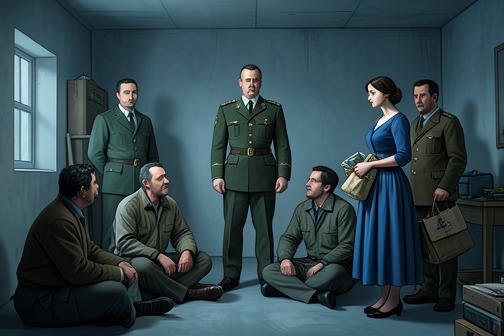
An [SS](entity:organization-recall-organization-ss-4977af73ebea) sergeant and Dutch [Security Police](entity:organization-recall-organization-0ead4f0326dd) arrived at 263 Prinsengracht and arrested the eight people hiding in the Annex, along with helpers [Victor Kugler](entity:character-recall-character-victor-kugler-768297e80cb1) and [Johannes Kleiman](entity:character-recall-character-johannes-kleiman-f043fa5d910e). The police took valuables and cash from the rooms; [Miep](entity:character-recall-character-miep-58d77f985e79) and [Bep](entity:character-recall-character-bep-cd728f537b1d) were not arrested.
The arrest ended the hidden household’s daily life and turned the danger that had governed every routine into an immediate reality. Anne’s diary had been left behind, and Miep later gathered and preserved the papers without reading them.
September 3–6, 1944
Deportation to Auschwitz
After detention in [Amsterdam](entity:location-recall-location-amsterdam-68440c77c10d), the eight Annex residents were sent to [Westerbork](entity:location-recall-location-westerbork-8b43af7cb5b3) and deported on the last transport to leave the camp on September 3. They arrived in [Auschwitz](entity:location-recall-location-auschwitz-5b34fe0799d2) three days later.
The journey carried the family from concealment into the machinery of mass deportation. [Otto Frank](entity:character-recall-character-otto-frank-1b4f5cc0deb7) later became the only one of the eight to survive the concentration camps, while the others were separated and sent toward different fates.
Autumn 1944–spring 1945
The Annex Residents Are Scattered
[Hermann van Pels](entity:character-recall-character-hermann-van-pels-ffaf1cfb1d7a) was killed in [Auschwitz](entity:location-recall-location-auschwitz-5b34fe0799d2), while [Peter van Pels](entity:character-recall-character-peter-van-pels-d23c45748a30) was sent on a death march to [Mauthausen](entity:location-recall-location-mauthausen-5c8b7d629402), where he died shortly before liberation. [Fritz Pfeffer](entity:character-recall-character-fritz-pfeffer-b7b8c49bb723) died in [Neuengamme](entity:location-recall-location-neuengamme-8c5526022a2a), and [Auguste van Pels](entity:character-recall-character-auguste-van-pels-b6dd4289a308) was transported through several camps before her death, whose date remains unknown.
[Edith Frank](entity:character-recall-character-edith-frank-9a953841720d) died in Auschwitz-Birkenau from hunger and exhaustion. [Margot](entity:character-recall-character-margot-50417649938f) and Anne were transferred to [Bergen-Belsen](entity:location-recall-location-bergen-belsen-1c858ce8eef1), where a typhus epidemic killed thousands of prisoners and claimed both sisters within days of one another.
Late February or early March 1945
Anne and Margot Die
[Anne Frank](entity:character-recall-character-anne-frank-6422d3542470) died in [Bergen-Belsen](entity:location-recall-location-bergen-belsen-1c858ce8eef1), probably in late February or early March 1945, a few days after [Margot](entity:character-recall-character-margot-50417649938f). Their bodies were likely buried in the camp’s mass graves, before British troops liberated the camp on April 12.
The diary’s final words had been written months earlier, when Anne was fifteen and still imagining a future beyond the Annex. Her death gives the unfinished ending its historical weight, while the pages she left behind preserve the voice that persecution could not silence.
June 3, 1945
Otto Returns to Amsterdam
After [Auschwitz](entity:location-recall-location-auschwitz-5b34fe0799d2) was liberated by Soviet forces, [Otto Frank](entity:character-recall-character-otto-frank-1b4f5cc0deb7) made his way back to [Amsterdam](entity:location-recall-location-amsterdam-68440c77c10d) by way of Odessa and Marseille, arriving on June 3, 1945. He learned that Edith had died and later learned that [Anne and Margot](entity:relation-recall-relation-d0bcb9338aa9) had not survived.
Otto was the sole surviving member of his immediate family and the only one of the eight Annex residents to survive the camps. [Miep](entity:character-recall-character-miep-58d77f985e79) gave him Anne’s preserved diaries, which she had kept unread after the arrest.
After the war; first published in 1947
The Diary Is Published
After learning that Anne was dead, Otto decided to fulfill her wish to publish a book based on her diary. He selected and edited material from her original and revised writings, producing the shorter version first known to readers around the world.
Later editions restored passages Otto had omitted, including material about sexuality and difficult family relationships. The diary’s publication transformed Anne’s private record into a widely read testimony of persecution, confinement and the persistence of a young person’s inner life.